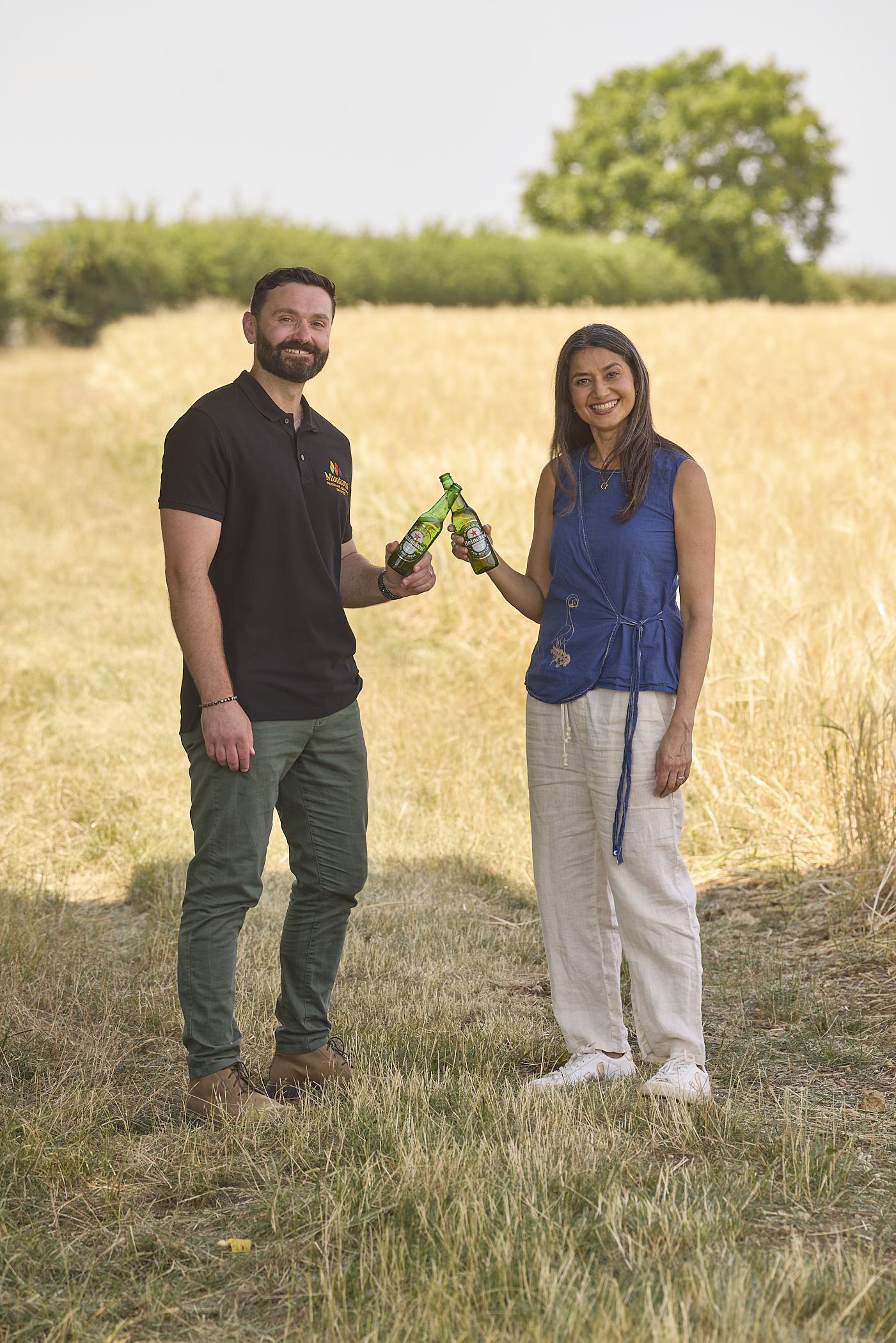
 The Stowmarket-based maltster, Muntons, has joined forces with HEINEKEN UK as part of one of the UK’s leading regenerative malting barley programmes, designed to support farmers to adopt more sustainable and resilient farming practices at scale.
Farmers will be directly paid a premium on regenerative barley yields, helping to reduce the risk of changing farming practices and making the transition commercially viable. This approach, combined with the scale of the programme, sets it apart from other regenerative agriculture malting barley initiatives in the UK to date.
The initiative brings together HEINEKEN UK, Muntons, barley merchant Cefetra, independent agronomists Soil Capital and fellow maltster, Boortmalt, to help UK growers transition towards regenerative agriculture, including farmers across key barley-growing regions, including East Anglia.
Regenerative agriculture focuses on farming methods designed to improve soil health, retain carbon in the soil, support biodiversity, enhance water management and build resilience against climate change. For Muntons, whose headquarters are in Stowmarket, the programme reflects the importance of working with growers and customers to support the long-term future of British malting barley.
In 2027, approximately one in every two pints brewed by HEINEKEN UK will use barley grown through regenerative agriculture practices, marking a major step in the move to make regenerative farming part of mainstream beer production. The first yield is due to be harvested in autumn 2026, before being brewed and served to consumers in 2027.
Sonia Thimmiah, Corporate Affairs Director, HEINEKEN UK, said: “British barley is at the heart of some of the UK’s best-loved beers, so making it more resilient for the future matters. This programme is about working with partners to make regenerative agriculture practical, scalable and commercially viable by strengthening soils and helping farms stay fit for the future. It is also an important contribution to HEINEKEN’s global Brew a Better World strategy and aims to protect water and nature as well as reduce carbon emissions.”
Mark Tyldesley, Chief Executive Officer, Muntons, added: “We started trialling regenerative agriculture practices with HEINEKEN back in 2021 and we’re proud to now be involved in an at-scale programme to produce significant quantities of regeneratively farmed malting barley. As a business headquartered in Suffolk, we understand how important strong, resilient local supply chains are for the future of British food and drink. We also know from our work with growers that every farm is different, and the transition to regenerative agriculture needs to be practical, commercially realistic and tailored to individual land. Through this partnership, we can help farmers identify the right steps for their business while supporting the long-term resilience of malting barley not only here in Suffolk but across the UK too.”
The programme will focus on barley-growing regions across much of England and Scotland, including East Anglia, the East Midlands, the South East, the South West, Fife and the Scottish Borders. It will support farmers with practical measures including financial incentives, agronomic advice and multi-year certainty, helping reduce the cost and risk of transitioning to more regenerative practices.
The programme is underpinned by Soil Capital’s independent measurement, reporting and verification, providing robust, farm-level data on key outcomes to ensure transparency and credibility, with progress to be tracked over time. Soil Capital will work closely with participating farmers to provide expert advice as they transition to regenerative practices, measuring the impact of the new methods on more than 30 indicators, including soil health, biodiversity and water management.